
 English
 Français
  Español
  Deutsch
September promotion: 20% off zipper repairs.
09/14/2026



A zipper exposed to seawater is subjected to significant stress. Salt, moisture, sand, dust, and the elements can gradually build up inside the slider, making the zipper difficult to operate or even causing it to jam completely.
This is particularly common with boats, marine covers, awnings, wetsuits, and various types of gear regularly exposed to saltwater.
However, a malfunctioning zipper does not necessarily mean the entire fastener needs to be replaced.
In many cases, the problem lies simply with the slider. The zipper can often be quickly repaired by replacing just that single part.
Saltwater is particularly harsh on the metal components of a zipper. When gear is regularly exposed to seawater, salt deposits can accumulate around and inside the slider.
Over time, several issues may arise:
· the slider becomes difficult to move;
· the zipper jams;
· the teeth no longer mesh correctly;
· the zipper stays open even after the slider has passed over;
· the slider may oxidize or become deformed;
· sand or dirt residue can interfere with operation.
The problem may therefore stem from the zipper slider itself, even though the zipper teeth remain in perfect working order.
This is especially common with marine equipment and items used in coastal areas. Salt and small debris from the marine environment can lodge in the slider mechanism and disrupt its operation.
Zippers are found on a wide range of marine equipment.
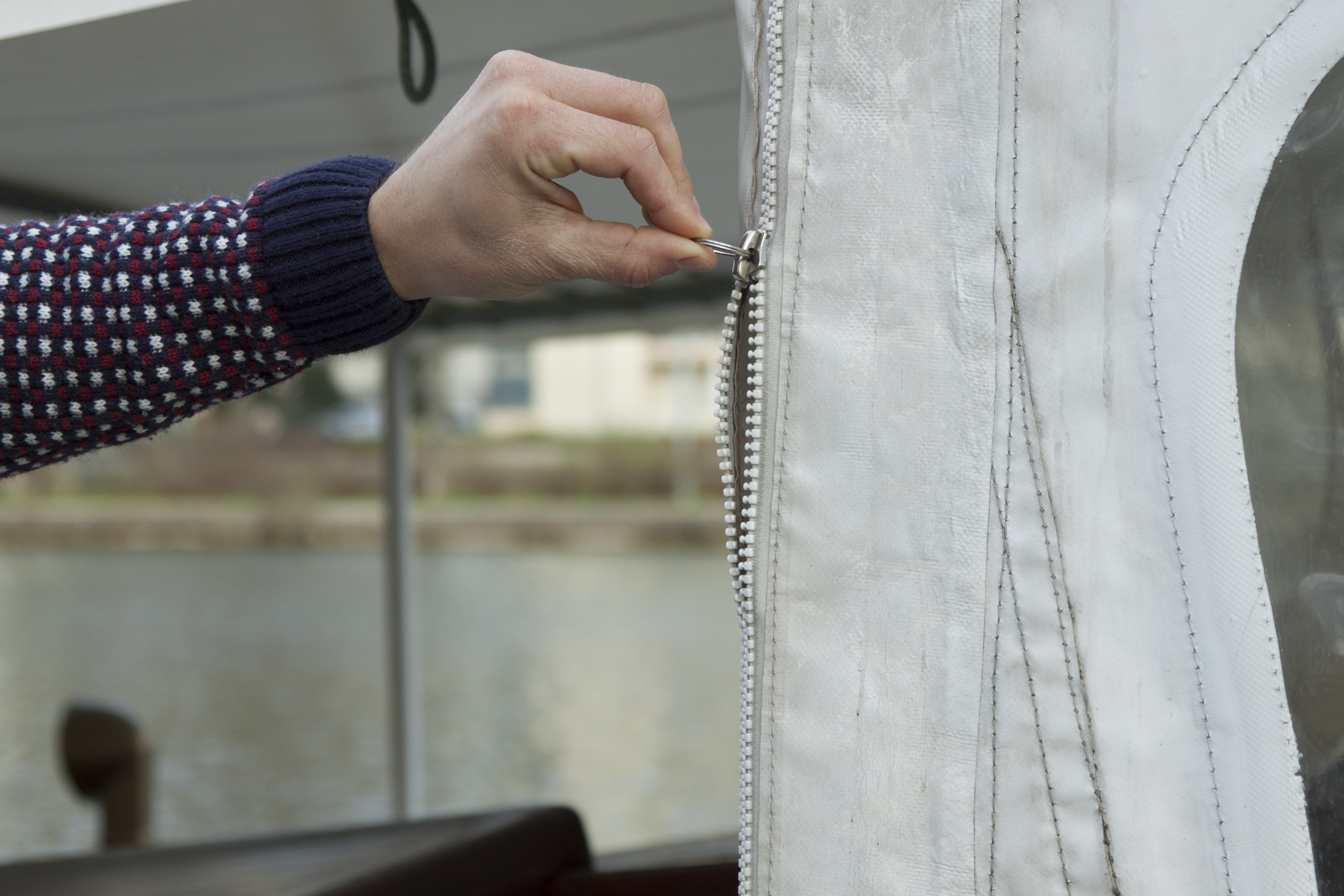
On boats, zippers are used on covers, bimini tops, protective gear, upholstery, awnings, and various outdoor fixtures.
These zippers are particularly exposed to sea spray, rain, sunlight, and salt. Consequently, they may wear out faster than zippers used on standard clothing.
Wetsuits and other marine gear also feature zippers that are subjected to harsh conditions.
After repeated use, the slider may become stiff or fail to close the zipper properly.
Protective covers, awnings, and other outdoor equipment or accessories may also be fitted with zippers.
Repeated exposure to moisture, sea air, and the elements naturally increases the strain placed on the zipper.
Before replacing the entire zipper, start by identifying the source of the problem.
If your zipper is stuck, avoid yanking hard on the pull tab.
Forcing it can deform the slider, bend the teeth, or damage the fabric surrounding the zipper.
Instead, check for sand, salt, or debris around the teeth and the slider.
After exposure to seawater, rinsing with fresh water helps remove salt deposits.
Then, let the zipper dry completely before trying to use it again.
For marine gear regularly exposed to saltwater, routine maintenance is better than waiting for the first signs of sticking.
Observe the zipper while trying to close it.
If the slider moves but the teeth no longer mesh correctly, the slider may be worn or deformed.
If the slider is broken, has come off the track, or is severely damaged, it can often be replaced without changing the entire zipper.
If the teeth are present, properly aligned, and in good condition, replacing the slider might be enough to get your zipper working again.
However, if the zipper has broken teeth or significant damage to the tape or fabric backing, the problem may be more complex.
If the slider is the faulty part, you don’t necessarily need to unpick the entire zipper.
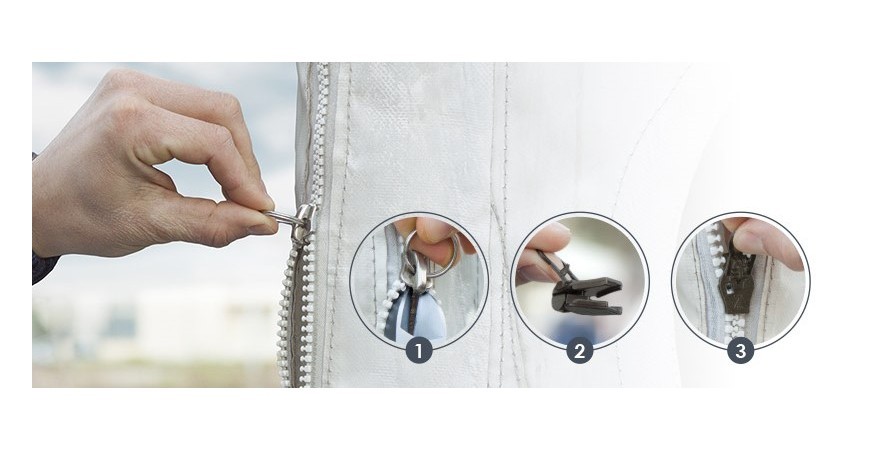
The concept behind the Clip&Zip replacement slider is precisely to allow you to replace the slider without dismantling the zipper.
Clip&Zip sliders are designed to clip directly onto the existing zipper, enabling a quick, no-sew repair. They are available for various types of zippers: metal, plastic, coil (nylon spiral), as well as invisible or waterproof zippers.
The repair involves just a few steps:
1.Identify the zipper type and size.
2.Remove the old slider if it is still attached.
3.Open the Clip&Zip slider.
4.Position it correctly over both sides of the zipper.
5.Close it until it clicks into place.
6.Slide the slider to ensure the teeth mesh correctly.
No need to unpick the stitching on your cover, wetsuit, or marine gear.
Not all sliders are suitable for every zipper.
To choose the right model, you must first identify the type of zipper teeth, rather than simply looking at the material of your old slider.
Clip&Zip distinguishes between four main categories:
-metal-tooth zippers;
-plastic-tooth zippers;
-coil (nylon spiral) zippers;
- invisible or waterproof zippers.
The size (in mm) of the interlocked teeth must also be taken into account. Specifications are often indicated by numbers such as No. 3, No. 5, No. 8, or No. 10, depending on the zipper type.
Not sure which model to choose? → Find your Clip&Zip slider
Yes. Clip&Zip sliders are made of die-cast zinc and are designed for various applications, including equipment exposed to the elements and seawater.
They can be used on marine equipment—such as boat covers, awnings, and outdoor gear—as well as on wetsuits.
They are also reusable: their opening mechanism allows them to be removed and reinstalled on another compatible zipper.
This feature is particularly useful for equipment requiring regular maintenance or repair.
Please note: the slider's seawater resistance does not mean the entire zipper automatically becomes watertight after the slider is replaced. Watertightness also depends on the type of zipper, its design, and the condition of the tape and teeth.
Proper maintenance helps minimize the risk of jamming and extends the lifespan of your zipper.
Here are a few simple habits to adopt:
When your gear has been exposed to seawater, rinse the zipper with fresh water to minimize salt buildup.
Sand can get lodged between the teeth or inside the slider. Avoid operating a zipper that is heavily coated in sand; clean it before use.
If the slider resists, do not pull forcefully. First, identify what is obstructing its movement.
Using a suitable maintenance product can help keep the zipper operating smoothly. Clip&Zip offers a maintenance gel specifically designed for metal, plastic, nylon, and invisible zippers.
Maintain your zipper → Discover Clip&Zip maintenance gel.
In many cases, yes.
When a zipper stops closing properly, the immediate assumption is often that the teeth are broken and the whole zipper needs replacing.
However, the problem may simply lie with the slider. Over time, it can become misshapen and fail to exert enough pressure to allow the teeth to interlock correctly.
In such cases, replacing just the slider allows you to keep the existing zipper and avoid a more extensive sewing job.
This is particularly useful for boat covers, awnings, or wetsuits, where a full replacement can be time-consuming and costly.
The principle is simple: repair rather than replace.
With a Clip&Zip replacement slider, you can:
- repair your zipper without sewing;
- avoid replacing the entire zipper;
- extend the lifespan of your gear;
- perform the repair yourself;
- reuse the slider on a compatible zipper;
- repair metal, plastic, nylon, or invisible zippers, depending on the model chosen.
Clip&Zip sliders are made of cast zinc and are designed to withstand the elements and seawater.
Some zippers and sliders are designed to withstand exposure to seawater. Clip&Zip sliders, in particular, are engineered to resist seawater and the elements.
Start by rinsing the zipper with fresh water to remove salt deposits. Let it dry, then check the condition of the slider and teeth. Avoid forcing it if the slider remains stuck.
Yes; if the zipper teeth and tape are still in good condition, it may be possible to replace just the slider. Clip&Zip sliders can be installed without sewing on various types of zippers.
Start by identifying the problem: a stuck slider, a broken slider, the zipper opening behind the slider, or damaged teeth. If the slider is the issue and the zipper is compatible, a replacement slider can fix it without replacing the entire zipper.
You need to identify the zipper's tooth type and size. Clip&Zip offers a comprehensive help page to help you find the right slider.
Not necessarily. If the teeth are in good condition, the problem might just be the slider. In that case, replacing the slider allows you to keep the existing zipper.
Before replacing your gear, check the zipper first.
A worn, stuck, or broken slider can often be replaced in minutes—without sewing and without dismantling the entire zipper. Discover our clip-on replacement sliders for your zipper and give your gear a second life.

Please sign in first.
Sign in